


A Guide to Commissioning Automotive Art
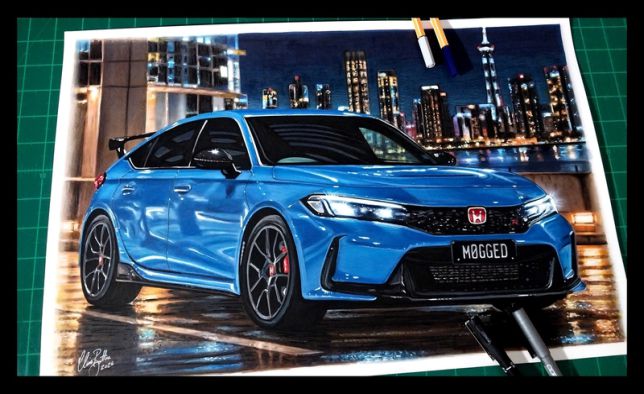
Custom hand-drawn 2023 Honda Civic Type R automotive artwork by Clive Botha of The Cartist.
By Clive Botha | The Cartist Automotive Art Journal
A commissioned automotive artwork starts with a vehicle and a story. It might be the car you have owned for years, a restoration you have just completed, a motorcycle tied to a favourite journey, or a dream machine you have admired from a distance. My role as an artist is to understand what matters to you, then work with you to shape that connection into an artwork.
If you are considering a custom car drawing or painting, the process is easier when you know what to prepare and what decisions to expect. Here is how I approach a commission at The Cartist, from the first enquiry through to the finished piece.
Begin with the vehicle and the reason it matters
You do not need to arrive with a finished concept. A useful first step is simply to tell me what vehicle you have in mind and why you would like it captured. The story can help determine the direction of the artwork. Is it a gift, a celebration of a restoration, a tribute, or a way to preserve a car that has been part of your life?
If you already have a particular style or layout in mind, describe it. If you are unsure, that is fine too. We can discuss the possibilities together and develop the idea around the vehicle, the intended setting and the purpose of the artwork.
Share photographs and important details
Photographs give me the visual information I need to understand the car or motorcycle. Send the images you have, even if you are not certain which ones are best. Several views can help clarify the shape and details. Let me know which photograph shows the vehicle most accurately and which features matter most to you.
Make a note of details that should be represented correctly: the colour, wheels, registration plate, badges, modifications or other distinctive features. If the artwork should include a person, a location, a logo or another view of the vehicle, mention that early. A later Journal article will look more closely at choosing reference photographs; for now, the main thing is to share what you have and explain what you want the finished piece to show.
When a photograph has limitations, such as soft focus or missing detail, I will tell you how that may affect what can be drawn. Clear, well-lit images are helpful, but we can discuss the available references before deciding how to proceed.
Talk through the composition and format
The composition determines how the vehicle appears on the page or canvas. A single view can keep attention on a distinctive profile or front three-quarter angle. Two or more views can show features that one angle cannot. A person, logo or meaningful setting can add context, while a simpler background can let the vehicle remain the focus.
I may prepare a digital layout or mock-up when the brief calls for one, such as when we are comparing background ideas or arranging several elements. This gives us a chance to discuss the direction before I begin the final artwork. The approach depends on the project, so we will agree what is useful for your commission.
We will also discuss the format that suits the idea. The medium, size, colour treatment and level of detail all affect the character of the finished work. My hand-drawn automotive drawings use markers, pens and pencils. Other approaches, such as hand-painted automotive paintings may suit a different brief. I will explain the options relevant to your project so we can settle on a direction together.
Agree the scope and quote before work begins
Once we have discussed the subject, composition and format, I can set out the proposed scope and price. The quote should make clear what the artwork includes, such as the number of vehicle views, background elements, people or other requested details. If there are alternatives that would change the scope, we can identify those before you decide.
Take time to review the proposal and ask about anything that is unclear. Before work starts, we should have a shared understanding of the artwork we are making and the terms for your particular commission. Pricing, payment arrangements and scheduling can vary with the brief, so I confirm those directly rather than assume every project is the same.
Review the direction, then let the artwork take shape
Depending on the project, we may agree a layout or direction before I begin the finished piece. Once that is settled, I work from the agreed references and details, paying close attention to the vehicle’s proportions, stance, colour and distinguishing features.
A commission is a collaboration, but it also involves a period of focused making. I will keep you informed at the stages we have agreed. If a question comes up that could change the direction or scope, we can discuss it before moving ahead. This helps the finished artwork remain faithful to the agreed brief and to the details that matter to you.
The finished artwork and digital file
When the artwork is complete, I can provide a high-resolution scan of a hand-drawn piece. The scan makes it possible to share the image digitally or reproduce it as a print, while the original remains a physical artwork with the marks and materials of its making. We will confirm what is included with your specific commission and how the finished work will be delivered.
A few questions people often ask
Do I need to know exactly what I want before enquiring?
No. Tell me about the vehicle and what you hope the artwork will capture. We can discuss composition, format and other choices together.
Can the artwork include more than one view of the vehicle?
It can, depending on the brief. If several views or additional elements are important, include them in your first enquiry so they can be considered in the composition and quote.
Can I request a background, person or personal detail?
You can ask about including these elements. Their suitability depends on the artwork and the available references, so raise them at the start of the discussion.
How much does a commission cost and how long does it take?
The price and schedule depend on the subject, format, detail and agreed scope. I will confirm both for your project before work begins.
Can I commission a vehicle as a gift?
Yes. Tell me that it is a gift and share any timing requirements when you enquire. We can discuss the artwork and the schedule for that particular project.
Ready to start?
If you have a car or motorcycle you would like to turn into a personal artwork, get in touch with The Cartist. Send a few photographs, tell me what the vehicle means to you and share any ideas you already have. We can take it from there and work out the right direction for your commission.
<<< Back to Blog


