


What Is Automotive Art? The Art, Passion and Stories Behind the Automobile
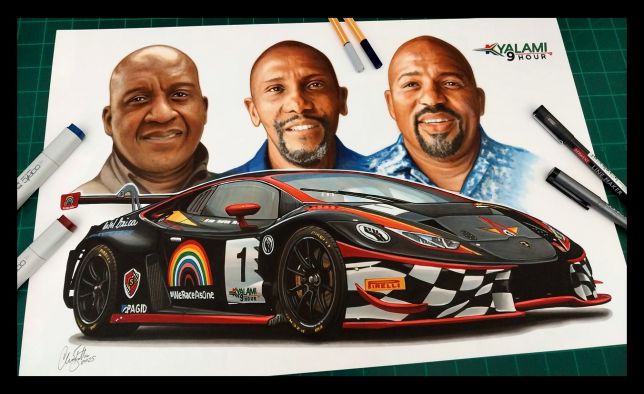
Hand-drawn Lamborghini Huracan automotive portrait by Clive Botha of The Cartist.
By Clive Botha | The Cartist Automotive Art Journal
Long before I had a driving licence, I was drawing the cars I dreamed of owning. Ferraris, Lamborghinis and Porsches filled my imagination, and drawing gave me a way to spend time with them before I could ever get behind the wheel.
That connection between cars and creativity has stayed with me. Today, as a professional automotive artist and designer, I see it in the stories people share when they ask me to capture a vehicle. Sometimes it is a dream car. Sometimes it is a first car, a painstaking restoration or a reminder of someone important.
Those stories are a good place to begin this Journal, because they help explain what automotive art really means.
What is automotive art?
Automotive art is creative work that takes vehicles, motoring and automotive culture as its subject. It includes drawings, paintings, illustrations, photography, sculpture and digital artwork, exploring everything from a car’s shape and engineering to the experiences and emotions associated with it.
A carefully rendered classic car, an expressive painting of a racing scene and a personal portrait of someone with their vehicle can all belong to this broad field. The medium and style may differ, but each artist brings a particular way of seeing the subject.
In my own work, I am drawn to the meeting point between design and personal meaning. I want the vehicle to be recognisable, with the proportions and details that give it character. I also want the artwork to convey why that vehicle matters.
Why cars inspire artists
A car offers an extraordinary variety of shapes, surfaces and visual relationships. The curve of a wing, the angle of a windscreen, the stance of the wheels and the sweep of a roofline all contribute to its identity. Even before the badges are visible, a familiar silhouette can tell an enthusiast what they are looking at.
Then there is the light. Paintwork reflects its surroundings; glass can reveal an interior while reflecting the sky; polished metal introduces sharp highlights. Capturing those relationships is part of the challenge and pleasure of drawing a car.
Composition adds another dimension. A low viewpoint can emphasise presence. A side profile can reveal the flow of the design. A close view can draw attention to a detail that might otherwise be overlooked. A background can connect the vehicle to a place, while a simple setting can give its form room to speak.
These choices allow an artist to interpret the same car in very different ways. Accuracy matters, but so do atmosphere, emphasis and the feeling of the finished piece.
My connection to cars began in South Africa’s motor city
My love for cars goes back as far as I can remember. Growing up in Port Elizabeth, in the Nelson Mandela Bay region, I was surrounded by an environment in which cars and the motor industry had a strong presence. For me, South Africa’s “motor city” was a fitting place for that fascination to develop.
As a teenager, supercars became a particular obsession. Years before I could drive, I drew the Ferraris, Lamborghinis and Porsches I hoped one day to own. Looking closely enough to draw them made me notice their differences: the proportions, the lines and the details that made each one special.
I studied art and went on to study graphic design at Port Elizabeth Technikon. My career later took me into automotive media and communications, including running MotorMedia Communications. Cars remained central to my working life, even as the way I worked with them changed.
In 2015, I returned to art and founded The Cartist. That brought together the interests that had been with me for so long: drawing, design and a lifelong enthusiasm for the automobile. “From Pencil to Pixel to Paint” expresses the range of that work, with each medium offering its own possibilities.
The stories behind the automobile
The appeal of automotive art often begins with how a vehicle looks. Its deeper significance can come from what it represents.
A first car might recall independence and the freedom to go somewhere on your own. A restored classic can represent years of patient work. A family vehicle can hold memories of holidays, ordinary journeys and people who once occupied the passenger seat. A motorcycle can carry the memory of a particular ride or a long-held ambition finally realised.
These are examples of the kinds of connections people can have with vehicles, and they explain why a modest everyday car can be just as meaningful a subject as an exotic supercar.
When an artwork is commissioned, details take on personal importance. A particular colour, wheel design, registration plate or modification may be essential to the owner’s memory of the vehicle. Including a person, a meaningful location or another view of the car can help tell a fuller story.
For me, understanding that connection helps guide the artwork. The question is both what the vehicle looks like and what the owner wants to remember about it.
Different media, different ways of seeing
Automotive art has room for many approaches. Pencil and pen can bring attention to line, structure and tonal detail. Markers and coloured pencils offer ways to build colour, reflections and texture. Painting can explore scale, atmosphere and expressive brushwork. Digital illustration offers another set of tools for shaping colour and composition.
Some artists pursue a highly realistic finish. Others simplify the subject, exaggerate movement or use bold colour to convey a particular mood. The choice depends on the artist’s vision and the purpose of the work.
In my hand-drawn automotive portraits, I use markers, pens and pencils to combine carefully observed detail with the character of an illustration. The aim is to capture the vehicle’s identity while allowing the drawing itself to have a presence.
A high-resolution scan also allows a completed drawing to be shared digitally or reproduced as a print. The original remains a physical artwork, with the marks and materials of its making.
What makes an automotive artwork meaningful?
For me, a successful piece brings together observation, composition and a sense of connection to the subject.
Observation gives the vehicle its identity. Small changes in proportion can alter its character, so the relationship between the body, wheels, glass and individual details deserves careful attention.
Composition gives the artwork direction. The viewing angle, placement and surrounding space influence where the eye travels and how the vehicle is experienced.
Personal meaning gives the piece a reason to exist in someone’s life. It might celebrate an achievement, preserve a memory or express a passion that has lasted for decades.
That combination is what makes automotive art such a rewarding field to work in. There is always another design to study, another story to hear and another way to bring the two together.
A place for cars, creativity and conversation
The Cartist Automotive Art Journal will explore that relationship through the perspective of a working artist. I will share thoughts on technique, stories behind artworks, the designs that inspire me and practical guidance for people considering a commission.
For this first article, I would like to leave you with a question: which vehicle would you choose to capture in an artwork, and what story would it tell?
If you have a car or motorcycle you would like to celebrate, you are welcome to get in touch with The Cartist. Tell me about the vehicle, what it means to you and the artwork you have in mind.
<<< Back to Blog


